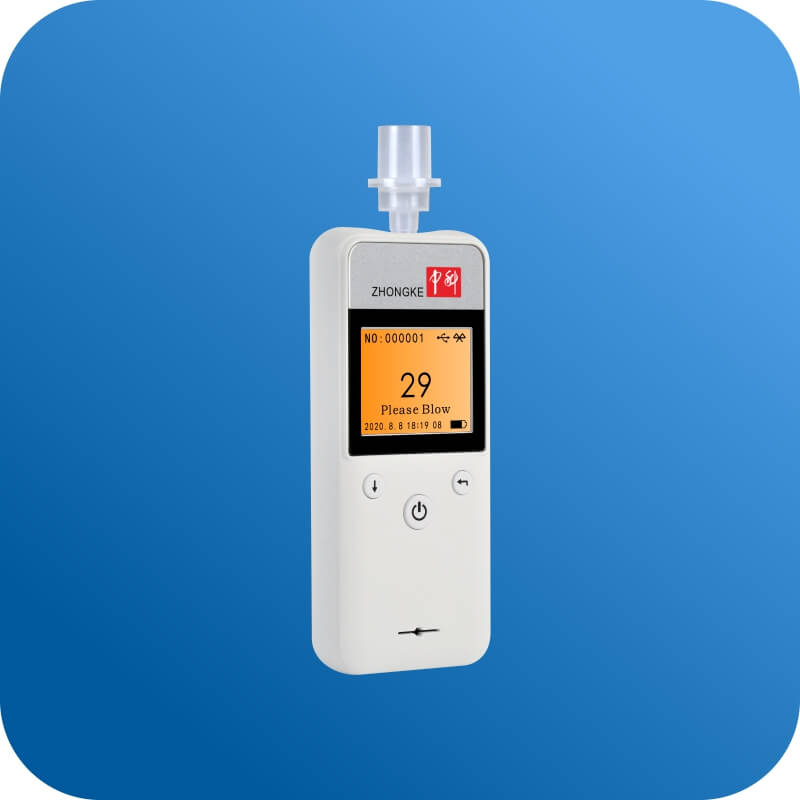
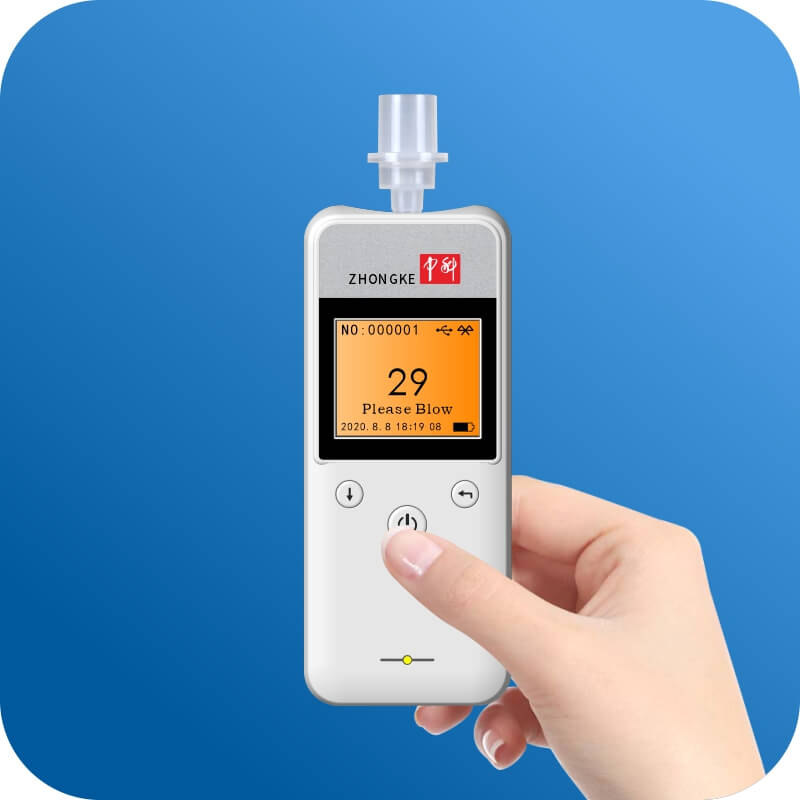
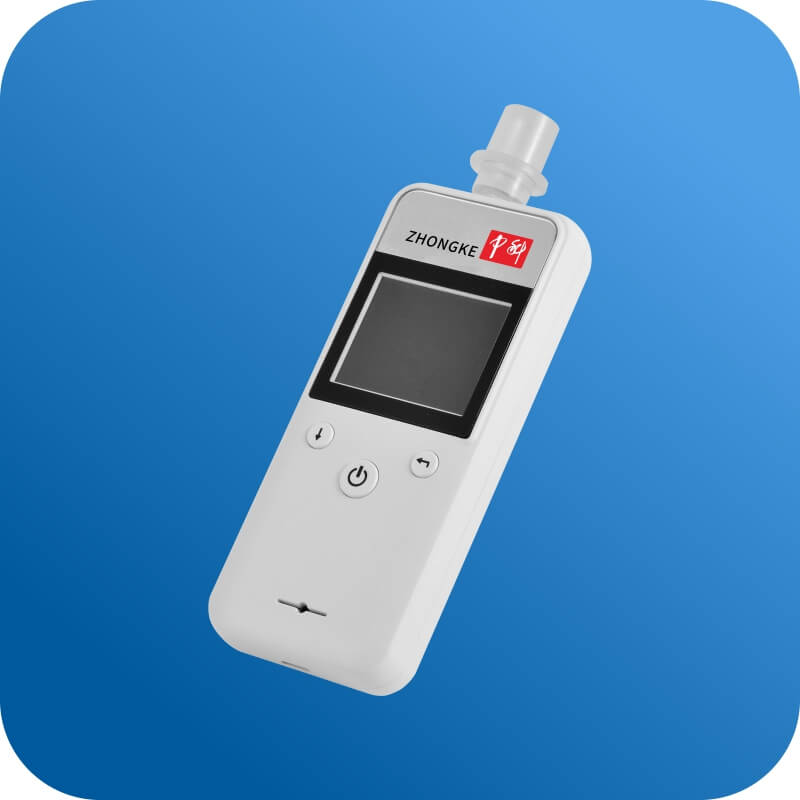

Essential details
Lead time:1周
Shipping:Express delivery
Specification Number:ZK30F
Product Code:ZK30F
Product Introduction


Q1: How does an electrochemical breath tester work?
A: It uses a fuel cell sensor that undergoes a chemical reaction when exposed to ethanol in the breath. This reaction generates an electrical current proportional to the alcohol concentration, which is then calculated and displayed as a BrAC value.
Q2: How accurate is this device compared to a blood test?
A: When properly calibrated, electrochemical testers provide a highly accurate estimate of Blood Alcohol Concentration (BAC) and are considered a standard for non-invasive screening. For absolute legal precision, a blood test is the definitive standard, but breath testers are widely accepted for enforcement and screening purposes.
Q3: How often does it need to be calibrated?
A: For professional and law enforcement use, recommended calibration intervals are typically every 6 to 12 months, or after a specific number of tests (e.g., 1,000 tests). Always follow the manufacturer's guidelines and local regulatory requirements.
Q4: Can mouthwash or other substances affect the reading?
A: Yes. Products containing alcohol (like mouthwash, hand sanitizer, or certain medications) can cause a temporary false high reading. It is recommended to wait at least 15-20 minutes after eating, drinking, or smoking before testing to ensure a clean sample from the deep lungs.
Q5: What is the difference between this and a semiconductor tester?
A: Electrochemical sensors are more expensive but offer far greater accuracy, specificity to ethanol, and long-term stability. Semiconductor sensors are cheaper but more prone to false positives from non-alcohol gases and require more frequent recalibration. Electrochemical is the professional standard.
Q6: How should I maintain the device?
A: Regular maintenance includes using a clean, dry mouthpiece for each test, keeping the sensor inlet clean, storing the device in a clean, dry environment, and ensuring it is charged with the official power adapter. Avoid exposing the sensor to extreme temperatures or moisture.
Q7: Is the data legally admissible?
A: When operated by a trained professional according to the manufacturer's instructions and with a valid calibration certificate, the data is typically admissible as evidence in many jurisdictions. However, local laws vary, so check your specific regional regulations.
Q8: What units does it display?
A: It can typically display results in mg/L (milligrams per liter), %BAC (Blood Alcohol Concentration), or g/L (grams per liter), depending on regional standards and user settings.