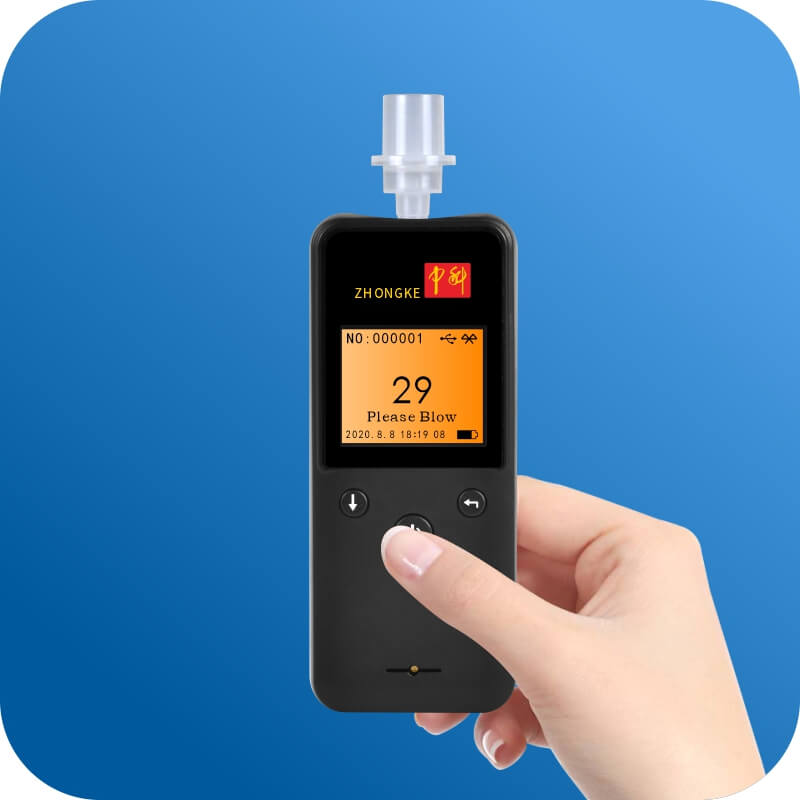
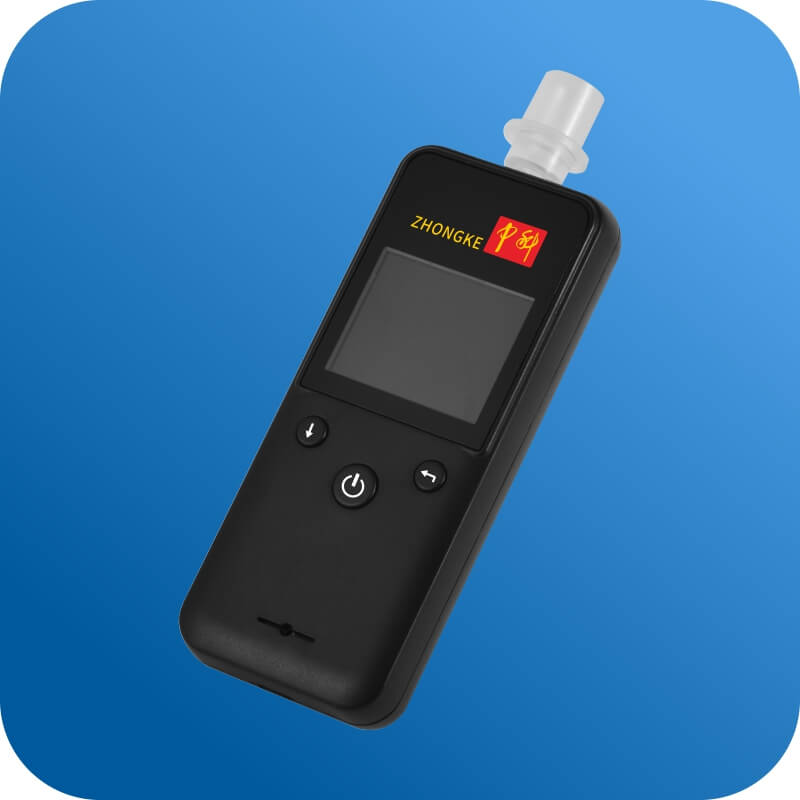
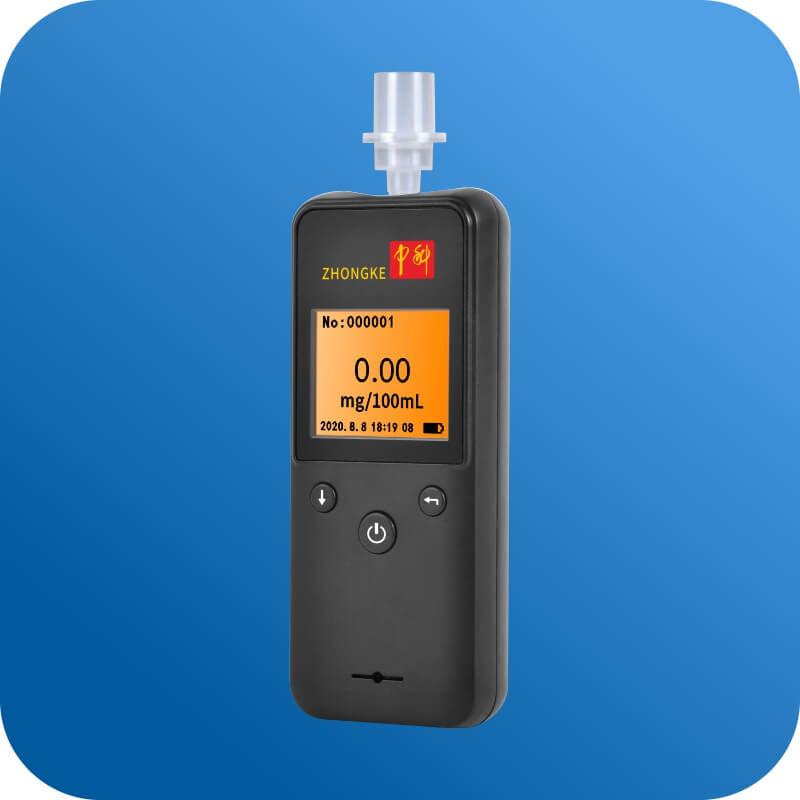

Essential details
Lead time:15天
Shipping:express delivery
Specification Number:ZK30S
Product Code:ZK30S
Product Introduction


Q1: How does a semiconductor alcohol tester work?
A: It uses a heated metal oxide (usually tin oxide) sensor. When alcohol vapor contacts the hot surface, it causes a change in the sensor's electrical resistance. The device measures this resistance change and converts it into an estimated blood alcohol concentration (BAC) reading.
Q2: How accurate is it compared to a professional breathalyzer?
A: Semiconductor testers are less accurate and less specific than professional electrochemical (fuel cell) devices. They are prone to a wider margin of error and can be affected by non-alcohol substances (like certain fumes or foods). They are designed for personal reference only, not for legal or evidential purposes.
Q3: What can cause false readings?
A: Many factors can interfere, including:
- Mouth Alcohol: Mouthwash, hand sanitizer, or recent drinking can cause extremely high false readings.
- Other Gases: Cigarette smoke, strong perfumes, solvents, or certain medications may trigger the sensor.
- Environment: High humidity, temperature extremes, and sensor aging affect stability. It is recommended to wait 15-20 minutes after eating, drinking, or smoking before testing.
- Other Gases: Cigarette smoke, strong perfumes, solvents, or certain medications may trigger the sensor.
- Environment: High humidity, temperature extremes, and sensor aging affect stability. It is recommended to wait 15-20 minutes after eating, drinking, or smoking before testing.
Q4: How often does it need calibration?
A: Semiconductor sensors drift more quickly than fuel cells. For semi-reliable results, a recalibration is recommended approximately every 3 to 6 months with regular use. Many low-cost consumer models are not user-calibratable and are treated as disposable after the sensor degrades.
Q5: Can I use this for legal defense or in court?
A: No. Data from semiconductor-based personal testers is generally not admissible as evidence in court or for DUI defense. Only calibrated, evidential-grade equipment (typically fuel cell or infrared) operated by trained personnel is accepted for legal purposes.
Q6: What is the main difference between this and the more expensive models?
A: The core difference is the sensor technology:
- Semiconductor (This): Lower cost, lower accuracy, prone to interference, shorter sensor life. Good for "ballpark" estimates.
- Electrochemical/Fuel Cell: Higher cost, high accuracy, ethanol-specific, stable, used by police and for workplace compliance.
- Electrochemical/Fuel Cell: Higher cost, high accuracy, ethanol-specific, stable, used by police and for workplace compliance.
Q7: How do I maintain it?
A: Use a clean mouthpiece (if applicable), avoid blowing saliva into the device, store it in a dry place away from extreme heat/cold, and replace the battery regularly. If readings become erratic or the device fails a self-test, it likely needs professional service or replacement.